SECCIONES
ARMENIA
LOCALES
DIÁSPORA
UGAB
INSTITUCIONES
EMPRENDIMIENTOS Y PYMES
OPINION
AGENDA
SOCIALES
EDICIONES

Temp.: -
Hum.: -
Viernes 24 de Abril - Buenos Aires - Argentina
PREMIO MEJOR MEDIO DE PRENSA PUBLICADO EN LENGUA EXTRANJERA - MINISTERIO DE LA DIASPORA DE ARMENIA 2015
Opinion - Editorial – Sardarabad Daily
120 Years of the AGBU: A Flame That Never Goes Out
15 de Abril de 2026

The Armenian General Benevolent Union, AGBU, was not born in times of peace. It was born in the middle of the storm, when the Armenian people faced their darkest hour, and someone decided that the answer would not be silence but organization. There are institutions that are born because a people refuses to disappear. The AGBU is one of them.

When Boghos Nubar founded it on April 15, 1906, in Cairo, there was no Armenian state, no security, no certainty of the future. There was, however, will. And that will took the form of a network, of active solidarity, of concrete action where others saw only ruins.

One hundred and twenty years later, that founding decision sustains half a million Armenians in more than 30 countries.

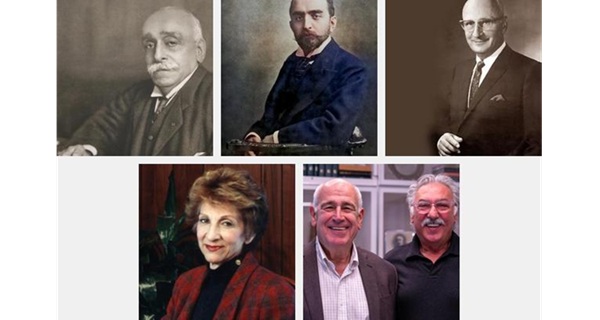
But institutions do not sustain themselves. They are sustained because each generation chooses to do so. Calouste Gulbenkian did so in the interwar years, supporting communities in Syria and Lebanon when exile seemed eternal. Arshag Karagyozian did so during the Second World War, when even the headquarters had to cross the Atlantic to survive. And it was Alex Manoogian who, for nearly four decades, transformed the AGBU into the largest Armenian organization in the diaspora: a beacon, not merely an institution.

Louise Manoogian Simone inherited that beacon and turned it toward the future: she opened doors to young people, strengthened ties with independent Armenia, and championed the founding of the American University of Armenia.

Berge Setrakian, during 22 years at the helm, reaffirmed that great institutions do not survive through inertia, but through the permanent decision to renew themselves without betraying themselves.

Today, Sam Simonian leads an AGBU that faces challenges Boghos Nubar could not have imagined: a more scattered diaspora, more fragmented identities, a world that changes faster than generations. And yet, the mission remains the same.

From Sardarabad, we believe that institutions like the AGBU are far more than charitable organizations: they are the invisible architecture that sustains a people without a territory of their own. They are proof that identity is not passively inherited — it is built, defended, and transmitted through conscious effort, generation after generation.

On this anniversary, we do not only celebrate 120 years of history. We celebrate the decision, renewed each day, to continue being Armenian. Because as long as that decision exists, no exile will be permanent and no story will be finished.

Más leídas