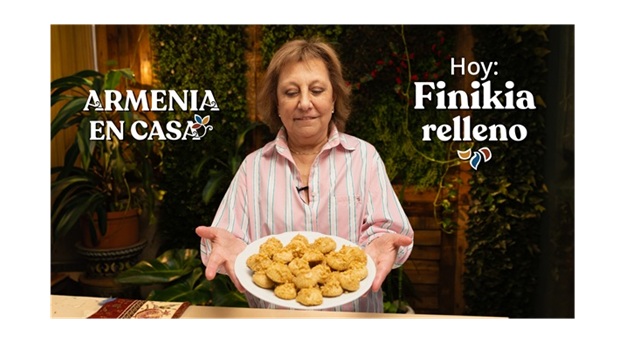
Finikia: The Sweet That Traveled in Exile Suitcases and Became Armenian Cultural Resistance
Behind its syrupy texture and walnut heart, this dessert hides a story of coexistence, tragedy, and resilience. How diaspora families saved a recipe that today continues to bring generations together around the world.
Among the treasures that adorn the festive tables of the Armenian community, there is a spiced bite that tells a story much deeper than that of its ingredients. Finikia, often broadly associated with Greek pastry-making, trace their roots back to a past where culinary borders blurred and cooking was a shared language.
Today, this walnut-filled dessert stands as a symbol of identity and resistance for the Armenian diaspora.
To understand the origin of finikia, one must travel back in time to the early 20th century, to the vibrant port city of Smyrna. At that time, Smyrna was a brilliant cultural and economic hub, a melting pot where Greeks, Armenians, Jews, and Turks lived together in an environment of constant exchange.
In that setting, kitchens shared techniques and secrets. The Armenians of the region prepared these sweets—which they called interchangeably finikia or melomakarona—to crown the most important festivities of the year, such as Easter or Christmas, which the Armenian Apostolic Church celebrates every January 6th.
The name of this preparation is no accident. The word finikia comes from the Greek term foinikia, which refers to date palm trees.
Women molded the dough by hand to give it an oval shape, deliberately mimicking the figure of a date. In the Middle East and historical Armenia, this fruit is the absolute symbol of abundance, sweetness, and hospitality. By filling this dough with a compact mixture of walnuts and spices, the humble dessert was transformed into a luxury treat, carefully reserved to welcome guests and honor visitors.
The history of this sweet took a dramatic turn with the forced migrations and the Armenian Genocide, particularly after the Smyrna catastrophe in 1922. Armenian and Greek families were forced to flee their homes, often sharing the same refugee ships bound for Greece, Lebanon, Syria, France, Argentina, or the United States.
In their suitcases, they carried hardly any material belongings, but they carried their recipes with them. In the new homes of the diaspora, preparing filled finikia stopped being a simple culinary custom and became a true act of preservation and identity. The traditional dough—made with olive oil, orange juice, and a touch of cognac—along with the generous use of cinnamon, cloves, and orange blossom or rose water in the syrup, began to reflect the unmistakable palette of aromas of historical Western Armenia in distant lands.
Today's Table: Uniting Past and Present
Today, when visiting an Armenian community fair or a traditional bakery, it is common to find finikia shining on trays alongside other traditional sweets.
Their preparation remains a ritual. The fact that they are filled requires time, patience, and manual labor, encouraging families to gather in the kitchen. It is, in essence, the classic image of generational transmission: young hands learning from expert hands how to seal the dough, ensuring that the flavor of their ancestors—the one that survived exile—remains alive in every celebration.
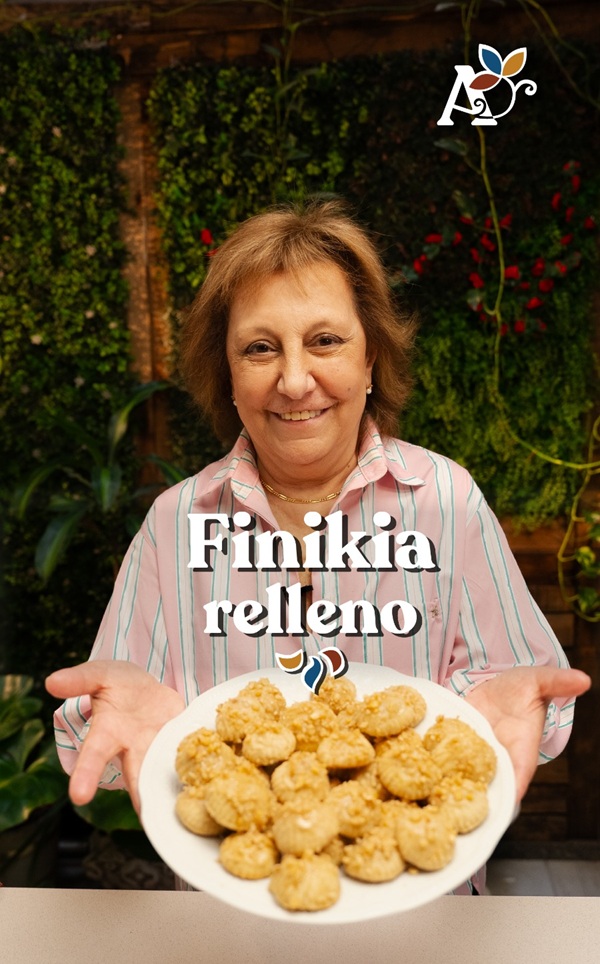
https://youtu.be/FJBqVJpchbg?si=219GRLbsCZx9O10F
https://www.instagram.com/reel/DZs_9sOBrkU/?igsh=eHlzd2l4enliaWJ1