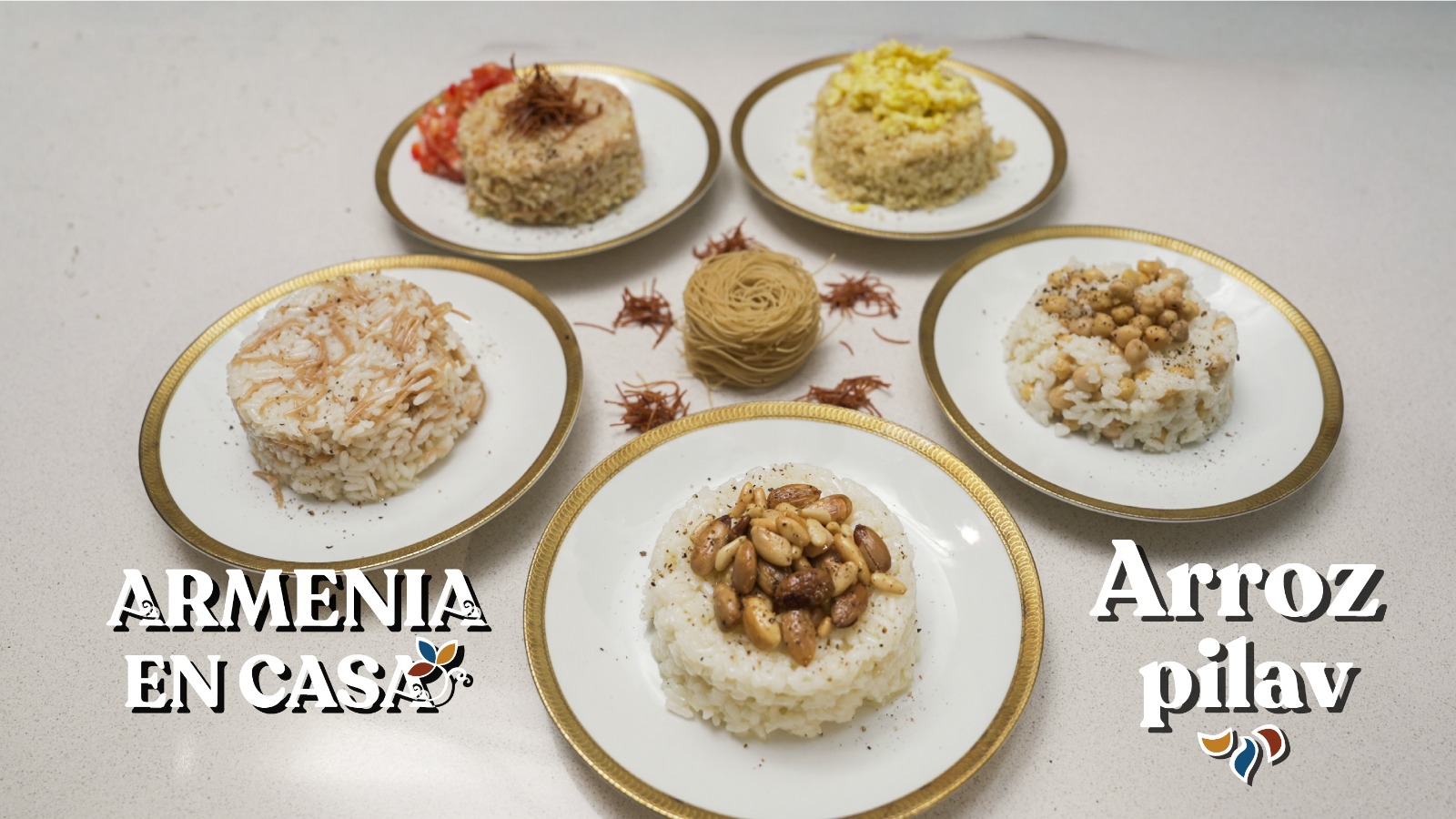
Pilav: a grain of history in every bite
Pilav—also known as pilaf—is much more than a culinary preparation: it is a living expression of history, a dish that has crossed centuries and geographies to become one of the oldest and most resilient dietary foundations of humanity. In every version, at every table, pilav tells a story of encounters, migrations, and cultures in dialogue.
Its origins date back to Antiquity, at the meeting point between India and historical Persia. Even its name reflects this journey: from the Sanskrit pulaka, referring to small portions of rice, to the Persian polow, the root of many of today's names. Beyond words, what defines pilav is its essential technique: cooking grains in an aromatic medium, combining broth, fats, and spices to achieve a perfect balance of flavor, texture, and nutrition.
It is believed that this technique expanded westward driven by the campaigns of Alexander the Great and, above all, by the incessant transit of merchants along the Silk Road. Throughout this journey, pilav was transformed without losing its essence, adapting to local ingredients: rice in fertile regions; wheat, barley, or millet in more arid territories.
One Geography, Multiple Identities
Throughout its vast expansion, pilav adopted its own characteristics in each region, reflecting landscapes, products, and traditions. Beyond its ingredients, pilav has played a central role in the social life of many cultures; a single pot can feed many, symbolizing generosity and family cohesion. In the Caucasus and neighboring regions, offering a well-executed pilav is a supreme sign of respect. The shine of the grain—an indicator of the quality of the fat—and its perfect separation—a sign of technique—speak directly to the host's skill.
Pilav in the Armenian Context
In Armenia, pilav acquired a unique identity, deeply linked to its geography. In a mountainous land where wheat was historically predominant, bulgur became a fundamental base, giving rise to nutritious versions full of character. One of the distinctive techniques of Armenian cuisine is the pre-toasting of fine noodles before incorporating the grain. This seemingly simple step transforms the final result: it intensifies the flavors and adds toasted notes that have become an unmistakable signature of the culinary tradition of the Caucasus.
Today, pilav remains a symbol of identity and memory. A dish that, in its apparent simplicity, contains centuries of shared history. Because in every loose and fragrant grain, there is more than just food: there is culture, territory, and community.
https://youtu.be/NNErjNhoQvs?si=ewYLN7Wzr08zrf-W
https://www.instagram.com/reel/DXu1KCbp1f9/?igsh=MXFscGFjM2RwNDlnOA==