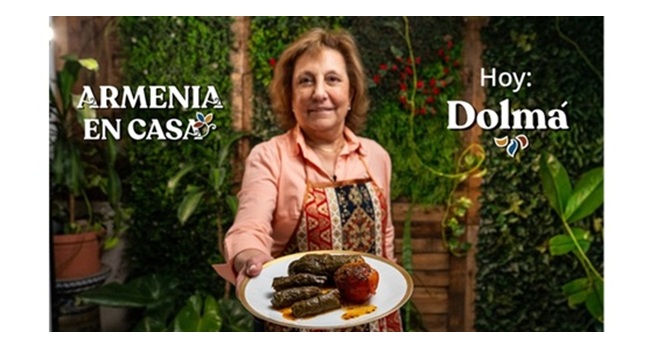
Armenia at Home, a cuisine that brings generations together
Today: Dolma
Dolma is one of the cornerstones of the culinary traditions of the Eastern Mediterranean, the Caucasus, and the Middle East.
Its name reveals its essence: “stuffed.” Yet beyond a technique, it is a living tradition that transcends generations and geographies.
At its most fundamental, dolma consists of vegetables filled with a carefully prepared mixture. It may appear as delicately rolled leaves—such as grapevine, cabbage, or chard—or as whole vegetables like tomatoes, peppers, eggplants, zucchinis, onions, and even potatoes. This diversity reflects both the richness of local ingredients and the creativity of each culture.
Two main forms define dolma: stuffed whole vegetables and rolled leaves. The latter, perhaps the most emblematic, require a meticulous and almost ritual process, where each piece is shaped by hand, one by one—a gesture that blends patience, skill, and tradition.
More than a recipe, dolma is a symbol of hospitality. It holds a place at family tables, celebrations, and gatherings, embodying the act of sharing. Over centuries, different cultures have embraced and reinterpreted this preparation, creating a shared culinary identity that transcends borders.
In Armenia, this tradition is celebrated with particular pride during the Dolma Festival, where more than seventy varieties have been presented. Each region, each family, and each community contributes its own version, turning the event into a true celebration of gastronomic diversity. There, dolma becomes not just a dish, but an expression of identity, memory, and collective creativity.
https://youtu.be/qQ6hJbGjlOE?si=82ZUJxUYKgcNQY9i
https://www.instagram.com/reel/DXczd7bPiaw/?igsh=MTU1OW1ocjlpcWxlcg==